
As I learned the basics of SEO, I was eager to put my growing skills into practice. In part one, I wrote about my inactive blog and how I made both on and off-page SEO changes to increase visibility and re-establish my online presence. With Google’s shifting algorithms impacting many small sites, I knew not to expect my blog to shine overnight. SEO can be a slow process when it comes to seeing results, but I was excited to see what would happen—good or bad—after applying the techniques. As I mentioned before, I had nothing to lose except the cost of new hosting.
I decided to keep the website anonymous in this post, but to set the stage, it’s a food blog. Food blogs are everywhere, making it challenging to stand out. I started out as a lone wolf with a small kitchen and a cheap camera. My content featured simple images, printable recipes, and straightforward text. I knew in my blog’s revival I had to put in a little more effort, which remains an active goal!
The Great Cookie Experiment

For my SEO experiment, I focused on a food product released in early 2024, using it as the core ingredient in a cookie recipe. This set me up for a page rich in keyword varieties by highlighting the brand, product, and recipe in different ways within my text. Keyword strategy is crucial in SEO because it not only clarifies the purpose of your post, but choosing the right terms can help users find your site. I imagined myself as a visitor: if they were searching for my cookie recipe, what would they type in the search engine? Short-tail keywords like ‘cookie,’ and ‘recipe’ came to mind, but they were too vague to rank on Google’s first page. I needed long-tail keywords for more specificity. My target audience was users searching for recipes featuring the product, so I combined short-tail single words with the brand and product name. As I wrote, I naturally mentioned the item and ingredients in different ways, being careful to avoid “keyword stuffing.”
“I imagined myself as a visitor: if they were searching for my cookie recipe, what would they type in the search engine?”
My images showcased the product container, ingredients, and the multi-step process from cookie batter to the freshly baked finale. I optimized the file sizes in WebP format to keep quality high while improving page speed. The WP Recipe Maker plugin on WordPress made it easy to integrate the recipe into my post with metadata and Schema support to increase search visibility. I also used another plugin specifically for SEO, AIOSEO, to help craft a strong headline, meta description, and appealing social media snippets.
I’ve come across mixed opinions from experts about whether these tactics would make a significant impact in the SEO game. There’s no exact formula for guaranteed success. Still, I was curious to see how my beginner SEO approach would compare to my old blogging days when I relied solely on organic traffic and a lot of hope!
My SEO Blog Post Results: The Month Before
Before launching my cookie experiment, I reviewed my site’s progress from the previous month. According to Google Search Console (see the chart below), my site had fewer than 300 visits. With less than 30 articles, an average search position of 17 was not too bad for a dormant blog. Ideally, you want to aim between 1 and 10, where page one results appear—we all aim for that! Sitting at position 17 meant the majority of my articles were sitting pretty on the second page. While 5,600 users saw my site on the search list, only 5% clicked through.

When setting personal SEO goals for my cookie experiment, I kept my expectations realistic. My goal was to reach 1,000 clicks across my entire site in the first month after publishing the post. My main objective was for the cookie post to land on the first page of the search results, targeting relevant keywords for the brand and product name. I also set out to promote my post on various social media platforms, both familiar and new to me. Although I was hesitant, trying new apps would present an opportunity for me to explore the formats further and see if the extra marketing would boost my site’s performance.
My Social Media SEO Strategy
I planned to use four major social media sites to share my new post: X (Twitter), Facebook, Pinterest, and Instagram. Instagram was my most active account, while X and Facebook had minimal engagement. I posted an appealing image and blog link to each platform, tagging the brand’s accounts. On Instagram, I used hashtags related to the product and liked similar photos in hopes to attract users to my account. Hashtags are similar to keyword searching on Instagram. On Facebook, I joined a few recipe-sharing groups and shared my link. Pinterest was a natural choice since the recipe community is so active, and just putting my link there would guarantee traffic over time. Although I had a decent following on X, engagement had dropped since its rebranding, but I posted anyway. To my surprise, the food brand at the core of my article left me a very nice comment on my cookie creation.

My social media returns were collectively mild, so I decided to take a step further. I was good with images, but what about video? I created a simple 30-second slideshow video with narration for TikTok and YouTube Shorts to showcase the cookies. My resources were limited to static images, but short-form content is popular these days. I quickly noticed the fleeting nature of these videos—they spike in visibility on day one, then gradually fade. My YouTube Short earned over 500 views on the first day before leveling off, while TikTok performed better with 1,700 views. Analytics showed that about half of viewers watched less than 15 seconds before swiping away. I expected this since my video lacked dynamic content, so I made a note to use more moving imagery next time. A month later, my YouTube video resurfaced, scoring some organic keyword searches related to the brand. Since Google owns YouTube, my channel now ranks high when someone searches for my website’s name.
My SEO Blog Post Results: The Month After
After the first month, I saw improvement in my site’s performance. My goal of 1,000 clicks might have been ambitious, but I managed to nearly double my site’s traffic. Sharing my blog post across six different social media platforms and carefully incorporating targeted keywords and SEO techniques within my natural writing style seemed to give my site the boost it needed. My new post contributed to a 37% increase in impressions from the previous month, and the click-through rate (CTR) rose by 2%.
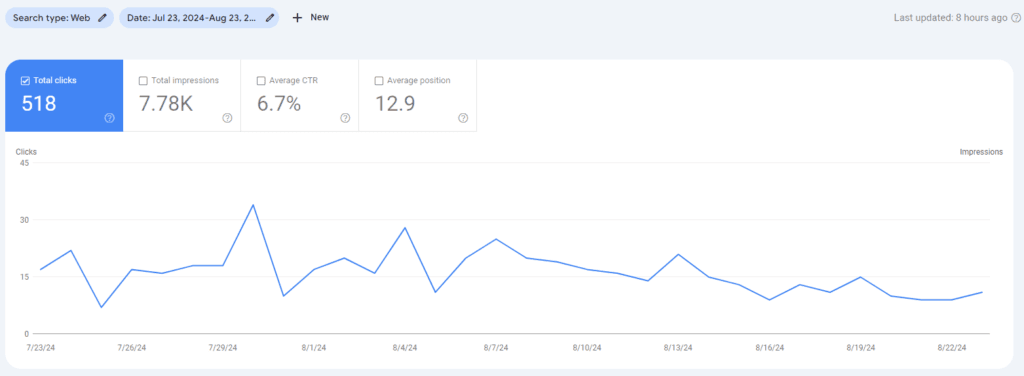
Focusing on the cookie article in its first month allowed me to pinpoint insights from Google Search Console. The post generated 190 clicks, making it the second most popular article at the time. I’m happy to report in the months following, it became the top-performing page on my blog! In its first month alone, the cookie post accounted for 36% of my site’s total visits. The click-through rate (CTR) of 13% revealed stronger traffic with that post. I also hit my target of reaching single digits in the Positions metric. But does that really mean my post reached the first page of search results?

How My Article Ranked in the SERPs
Google Search Console offers a handy feature that shows me the various queries users enter to find my site. My keyword strategy matched well with what appeared. Most users searched for the brand and product name, followed by my top short-tail keyword, “recipe.” Throughout the month, I Googled keywords to see if my site was indexed after giving it time to be crawled. In the first week, my article appeared on the second page of results and even made a few appearances on the first page before settling back to page two. Additionally, my recipe appeared in Google’s featured Recipe section, where it currently ranks #4 when users search for the product name alongside “cookie” or “recipe.”
I also tested other search engines using my preferred long-tail keyword phrase: “Brand Name Product Name Cookies.” DuckDuckGo, Yahoo, and Bing served my article in the #2 spot. It was exciting to see, but it also underlined the complexity of Google’s search algorithms, which is often influenced by Google’s own paid ads system often receiving preferential treatment compared to organic efforts. As a lone wolf with a humble blog trying to make waves in a crowded space, I’m proud to say I made a ripple!
What I Learned From My SEO Blog Post Experiment
Judging the article’s success by a month’s worth of data might seem premature. Some of my other popular posts lingered for a few years before settling on the first page of the SERPs. It wasn’t until I added my next post that I could really compare and contrast the effectiveness of my comeback efforts and identify my SEO strengths and weaknesses.
After the cookie post, my traffic numbers started to taper off to their previous state. I wondered if my recipe was already aging out, but I realized by adding content consistently, I could maintain those numbers at a steady rate. I decided to focus on launching my next article. The following month, I published a new recipe of a classic dish and followed the same steps to promote it on social media. However, the organic traffic for this dish was underwhelming. I resolved that the recipe was another small fish in the vast sea of food blogs, lacking the strong keywords needed to stand out. Since my branded cookie recipe attracted more attention, I plan to focus more on recipes featuring specific branded ingredients to enhance keyword specificity. The experience also brought to mind how highlighting food trends and product launches could increase my site’s popularity. In the meantime, I’m furthering my education on keyword research.

It’s clear to me that my network could benefit from more activity. Building backlinks with high-authority food sites would significantly help my presence in the SERPs. If a high-traffic website linked my cookie post or any other article, who knows how my search metrics might improve! After relying on organic traffic for years, I’ve seen some positive signs, but the progress has always been slow. There’s still much work to be done on my website regarding both on-page and off-page SEO. My site’s speed remains a major concern, and I’m working to improve it to retain visitors. The content is improving too, and I recognize the need to continue studying best SEO practices. My new goal is to publish at least one new post each month to build my content library and authority.
They say Rome wasn’t built in a day, and I know each piece I add to my evolving site will help me learn in various ways. Whether I’m laying down paragraphs, editing short-form videos, inspecting technical SEO elements, or improving the cosmetic side of my site, I’m equipping myself with more tools along the way. The process can be both pretty and challenging, but if the final result proves useful to a visitor, then I believe I’ve achieved my ultimate SEO goal of finding an audience.
Leave a Reply