
There’s an image shared by most millennials within the public school system as a symbol of joy, or rather, relief. That is the almighty and revered rolling television cart. It goes without saying that witnessing this beautiful sight upon entering a classroom represented a ticket away from monotony. For students, it was an escape from the routine of the educational hamster wheel. I’m positive teachers enjoyed the TV cart too, and used it as a break to grade papers and plan lessons.
In my final years of high school, I gained a revelation regarding the use of visual media in the classroom when a teacher informed me they usually had to submit a request and prove to some higher-up their media selections aligned with the curriculum. I can recall a number of occasions where a cluster of instructors scoffed at all that and, in the spur of the moment, subjected young minds like my own to (gasp) unapproved media. Examples include:
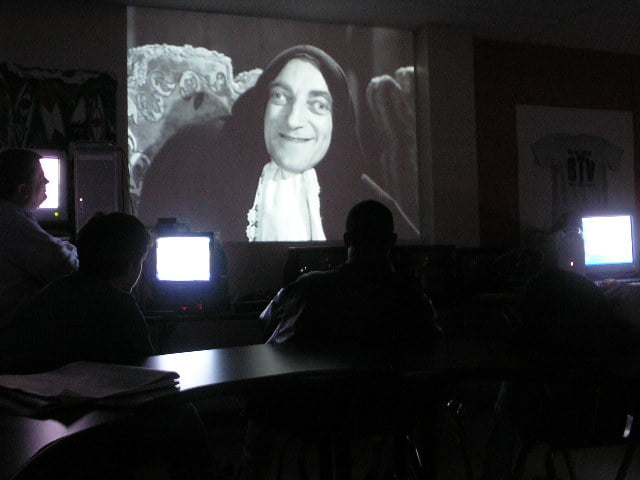
Young Frankenstein: Video Production, 12th grade; see photo
The Price is Right: Physical Health and Nutrition, 7th grade
Unspecified Nascar race: U.S. Government, 12th grade
One teacher used the TV cart effectively to coincide with the curriculum. Her selections appeared bountiful, which is understandable since she was a history teacher. Looking back, I suspect she had an affinity for media just as much as I did and found it to be an honest teaching companion rather than a mere excuse for a free day. For the record, she was an extraordinary teacher who kept our class engaged. I’ll call her Mrs. W. The class was World History Part 2, and it was in this particular class that our room was arranged with students’ desks occupying the left and right sides of the room, leaving a clear space in the middle for the TV cart—our savior and showman.
I vaguely remember World History Part 1 from my freshman year, which focused on the Aztec and Mayan civilizations. Part 2 pushed us forward to the Renaissance era and other European timelines. When war made an appearance, Mrs. W used the French Revolution to tie in with an adaptation of The Scarlet Pimpernel. The version she screened was the 1982 retelling starring Sir Ian McKellan. What little memorable morsels I have watching this film reveal lovely costumes, 80s TV-production aesthetic, and a foppish man proclaiming “Sink me!” A new classroom catchphrase was born.
I always link this movie with another from Mrs. W that involved France and war, The Count of Monte Cristo, a masterful story of betrayal, perseverance, and revenge. Having recently watched the wonderful adaptation from 2002, I’m not sure if it’s one from my learning days since the film would have been far too new for my school’s aging video library. It was likely the 1975 version starring Richard Chamberlain. It was clear Mrs. W was all about the literary classics.
Then we took a turn from TV movies based on historic-tinged literature to the land of documentaries—a medium forever welcomed in the education world. Mrs. W followed up our textbook’s mention of the tragic fall of the Romanov dynasty with the famed NOVA documentary Anastasia—Dead or Alive. If I had to pick a top 5 of memorable ‘school TV cart’ viewings, Anastasia gets a prize. Our class was transfixed with pictorials and home movies of the young princess and her siblings living the high life followed by the dramatic reenactments of the family’s terrible demise by execution from the Bolsheviks. And just as twisted as the DNA strands sprinkled throughout, we all wondered aloud if the woman from Berlin named Anna Anderson, who claimed she was Anastasia, was telling the truth when she said she somehow escaped the path of bullets and made it out alive. At the time of the documentary, only the remains of a few family members had been identified when found in a mass grave. Yet Anderson’s storytelling, handwriting, and physical appearance convinced many she was the biological daughter of Czar Nicholas II. Mrs. W encouraged us to draw our own conclusions, but we were interested in which side she was on. Sadly, I can’t for the life of me remember what Mrs. W said! Personally, I had my doubts. About five years after class was dismissed, all family members of the Romanov dynasty were accounted for based on newly found remains and advancements in DNA testing. The woman in question had long since passed away. Anna Anderson was a fascinating fraud.

From movies to documentaries to music, Mrs. W kept her media selections interesting and timely. When the TV cart was unavailable, she borrowed the library’s oldie-but-goodie record player and attempted to tap into our youthful energy with Tchaikovsky’s 1812 Overture. The majority of our impressionable minds preferred the present-day bombastic stylings of Eminem and 50 Cent, but we accepted it over taking turns reading from the textbook. She also shared a famous vinyl from the 1960s memorializing President John F. Kennedy’s short time in political office with a selection of his speeches. He was no Princess Anastasia, but with the Iraqi invasion underway and the Bush administration in the eye of the critical storm, I’m sure Mrs. W had her reasons to press play.
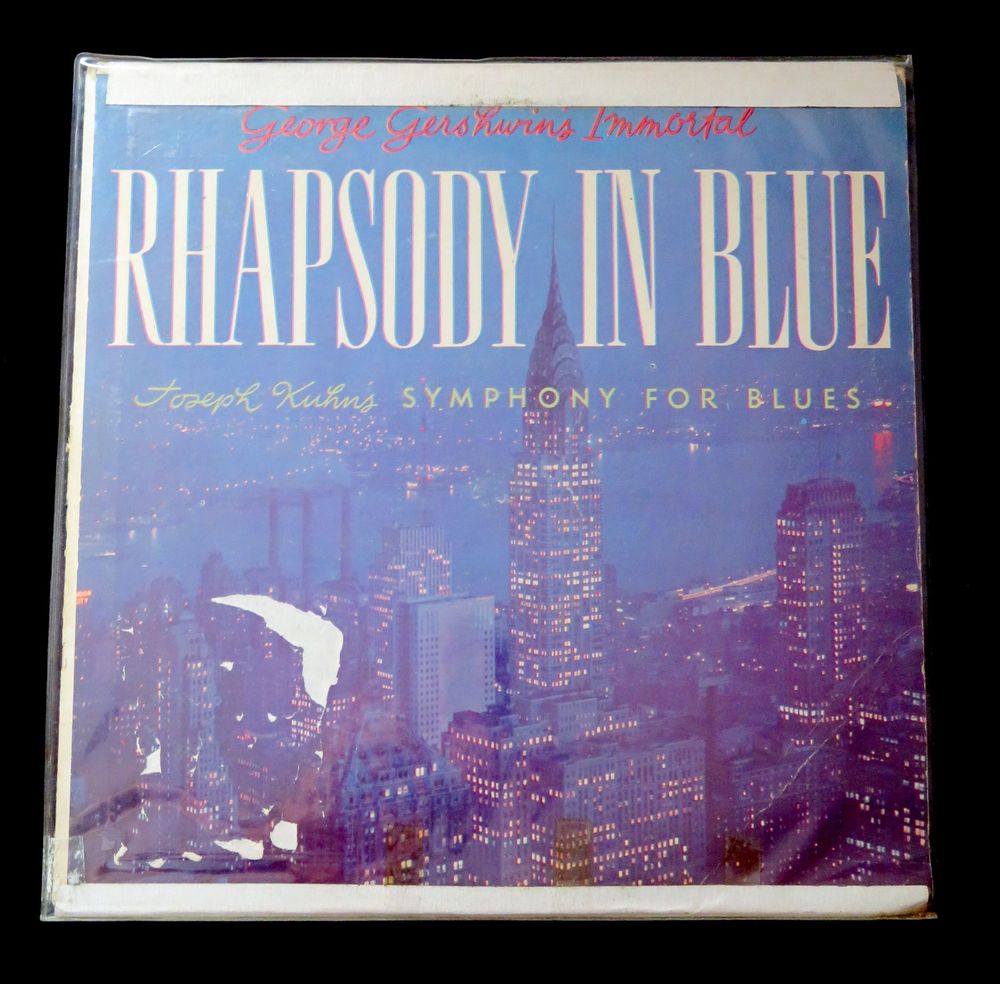
I suppose the memory of this high school class had such a stronghold on me than any other not just because of the entertaining media, but because I got to share the experience with a few of my close schoolmates. And not only was World History Part 2 my last class of the day and my 10th year, but it marked the end of an era inside that particular school. It just so happened that Mrs. W was retiring and would not be making the move with us. The last few days of school saw many teachers boxing items and clearing the classrooms, wiping away years of décor and personality for the next generation. I remember Mrs. W asked if we were interested in a small collection of discarded books and records she chose not to take with her. For some reason, I selected George Gershwin’s Rhapsody in Blue. (I only knew of Gershwin because of An American in Paris, one of my favorite movies based on his symphony.) I thought the title somewhat alluded to the bittersweet transition of my academic time, and it made a worthy souvenir. Little did I know Rhapsody was basically a ticket back to America after a semester spent learning European history. The composition’s true origins did not unfold to me until I witnessed the cinematic opening of the movie Manhattan a year or so later. The symphony’s New York inspiration is quite epic; I’d like to think my reaction was similar to Mrs. W’s feelings about the 1812 Overture!
I haven’t seen Mrs. W since; I’m not even sure if she’s still alive, but I cherish the memories not just for the educational content but for the camaraderie and the unexpected joys brought by a simple rolling television cart. Her selections elevated what could have been a very dull class. It just goes to show you how a movie, documentary, or sound byte can be an effective teaching tool. My long absence from public school often makes me wonder if those TV carts still exist. By senior year, classrooms had received fresh installations of digital projectors, which were quite snazzy. It doesn’t matter what the hardware is – every pupil and teacher needs an AV break.
Media References
Baty, E. (2017, July 10). 25 Things That Don’t Exist In Schools Anymore. Redbook Mag. https://www.redbookmag.com/life/charity/g4513/things-that-dont-exist-in-schools/
D, C. (2013, May 5). La Muerte de los Zares de Rusia. Histori-K. https://porlasendadelahistoria.blogspot.com/2013/05/la-muerte-de-los-zares-de-rusia.html
Luckstruck. (2023, April 25). The Scarlet Pimpernel 1982 – Sink Me!/Odds Fish Compilation [Video]. YouTube. https://www.youtube.com/watch?v=mydlRZjSIC0
Leave a Reply