
In recent years, artificial intelligence (AI) has grown by leaps and bounds. Generative AI in particular has captured the public’s interest in the digital age by delivering instant results derived from text prompts. In a matter of seconds, platforms can provide specific writings, images, code, and general information to users in response to their requests. Since its inception, AI has spawned two groups of people in the education field and beyond: those who use the tool for guidance, and those who take shortcuts to avoid the work itself. The negative side of this innovation has given critics plenty of ammunition to call for stronger regulations. As the potential of this powerful technology is being realized, students and educators are uncovering the advantages of AI while recognizing some drawbacks along the way.
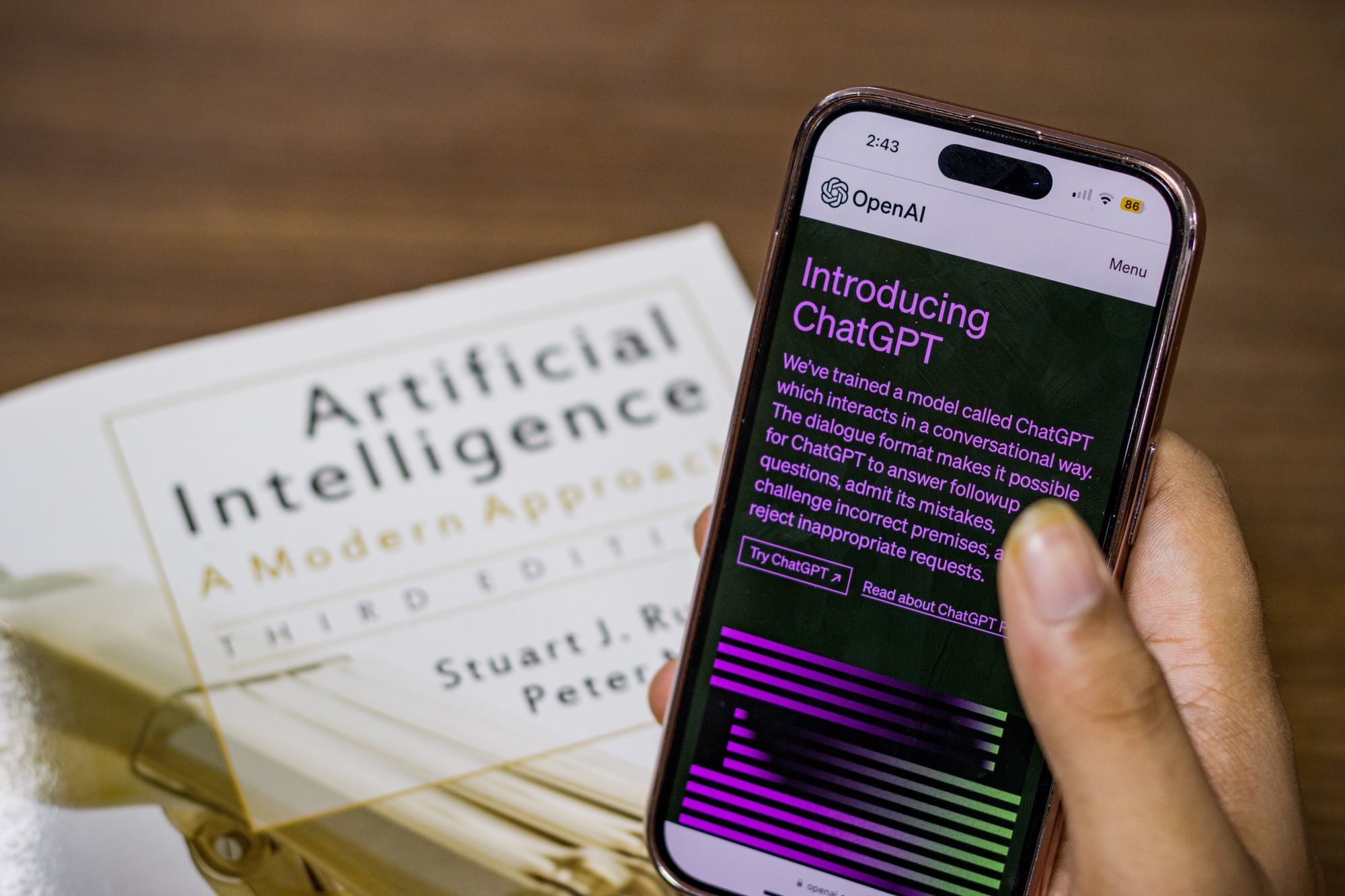
One of the most well-known AI text generators is ChatGPT, an open-source chatbot from the company OpenAI, for users to interact and obtain information. That information comes from ever-growing datasets of text and additional media that train the platform to provide more accurate results. As a free resource, ChatGPT quickly entered the educational realm as students eagerly embraced the service to help them learn new concepts, brainstorm, and get feedback on their assignments. Within months of ChatGPT’s launch, results from a survey conducted by study.com concluded that 89% of students had consulted the chatbot for help with their homework. The power of AI lies not only in its ability to generate responses to student queries but also in writing full essays, thus presenting a major conundrum for educators in grade schools and colleges. A few school districts have banned the use of ChatGPT in hopes of curbing cheating, and programmers even developed online checkers for the purpose of detecting plagiarism through an AI lens. Teachers can also usually detect who is using the service by the tonal difference between humans and computers. Ironically, some teachers are taking a cue from students and finding generative AI beneficial in their work to cultivate a better learning experience. Over half of the teachers surveyed by Impact Research in a July 2023 study have used ChatGPT for their job, and 33% have specifically initiated the help of AI for lesson planning and personalization strategies to cater to specific classroom needs and statewide lesson standards.
Although it’s easy to assume students are using generative AI solely to bypass critical thinking and the entire assignment process, one group is finding the technology extremely supportive in navigating what is typically a demanding learning journey. Students with learning disabilities have taken to using chatbots as personal mentors in order to better accommodate their learning needs. AI tools have the capacity to converse and guide a struggling student in organizing and developing their ideas, thereby creating a clearer pathway to make the process of completing an assignment less daunting. One way information can break down is by feeding the instructions to a chatbot and requesting the text be translated into smaller steps for the student to better comprehend. In addition, the solitary use of AI allows for a safe space where users can access services for queries and feedback without judgment. In and outside of the academic sphere, individuals can chat with bots online to enhance their communication skills and prepare for real-world social scenarios.

While the benefits of AI as a helping hand in and out of the classroom appear positive, the technology is far from perfect. Students’ intentions to manipulate the tool as a crutch are a clear issue, while others may find users’ dependency could take away from in-person collaborative experiences with peers and instructors. Another concern related to AI is the quality of the data models. Despite their growing knowledge set, the information is not without bias and inaccuracies. One argument is that the user must be specific in their prompts to get the information they desire but even then there is no guarantee the chatbot’s response will be correct. Avid followers tracing AI’s growth have noticed a downgrade in quality responses over time. This has led to speculation that programmers may be addressing user reliance and quality criticisms by shifting the models to offer minimal feedback. Considering the open-source status of the technology, it’s clear generative AI is by no means disappearing entirely. Tech-savvy users will likely find ways to manipulate models to their advantage.
AI has shown its power in the ever-evolving technological map. Industries like academia have reason to be suspicious of AI’s impact in the future as improvements continue, and schools will have to determine how to adjust to the magnitude of available resources. As of 2023, the status of AI reveals its growing potential, but the irregular results quiet most alarms for educators. Students will always have to be reminded of the importance of developing critical thinking and associated learning skills as well as to be prepared to identify errors from AI’s output. The technology should be viewed as a set of training wheels on one’s bicycle as one starts off on their trek. Just as training wheels support beginners as they learn to ride, AI can greet students at the initial stage before allowing them to independently pedal on their academic journey.
References
Kampus Production. (2020, November 20). Multiracial group of students and teacher having fun during teamwork. Pexels. https://www.pexels.com/photo/multiracial-group-of-students-and-teacher-having-fun-during-teamwork-5940837/
Mishra, S. (2023, April 19). Webpage of ChatGPT, a prototype AI chatbot, is seen on the website of OpenAI, on iPhone or smartphone. Pexels. https://www.pexels.com/photo/webpage-of-chatgpt-a-prototype-ai-chatbot-is-seen-on-the-website-of-openai-on-iphone-or-smartphone-16461434/
Productive Teaching Tool or Innovative Cheating? (n.d.). Study.com. Retrieved July 23, 2023, from https://study.com/resources/perceptions-of-chatgpt-in-schools
Survey Finds Majority of Teachers, Parents Report Positive Impact of ChatGPT on Teaching and Learning. (2023, July 18). Walton Family Foundation. Retrieved July 23, 2023, from https://www.waltonfamilyfoundation.org/about-us/newsroom/survey-finds-majority-of-teachers-parents-report-positive-impact-of-chatgpt-on-teaching-and-learning